
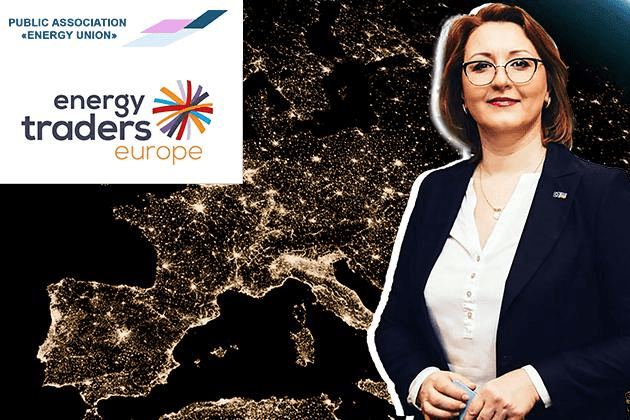
The Energy Union of Ukraine launches cooperation with Energy Traders Europe
European energy is more than networks, markets, and megawatts — it is a culture of trust, clear rules, and partnership that enables markets to function efficiently.
In this spirit, on 27 October 2025, a working meeting took place between the Energy Union and the European association Energy Traders Europe (ETE).
The discussion focused on shared challenges, opportunities for cooperation, and pathways toward closer integration between the Ukrainian and European electricity markets.
European experience worth adopting
Energy Traders Europe (ETE) is one of the most respected energy associations in Europe. For over 25 years, it has represented energy traders and suppliers across the continent.
Today, ETE unites more than 170 member companies active on markets for electricity, natural gas, CO₂ emissions, and energy attributes.
Its mission is to support the development of transparent, competitive, and liquid markets that ensure supply security and effective interaction among all market participants.
ETE works closely with EU institutions, develops contract standards, trading procedures, and risk-management methodologies, and contributes to shaping European energy policy.
Not without reason is ETE called the “architect of the European market model”, which has become the foundation of today’s integrated energy system.
The Ukrainian voice in the European dialogue
During the meeting, the Energy Union presented itself as an association uniting Ukrainian suppliers and traders—companies that currently serve millions of electricity consumers.
We shared our vision for the Ukrainian market, key challenges, and our aspiration for deeper integration into the European energy space.
In future cooperation, we intend to focus particularly on supply contracts, as the contract is the very point at which the market becomes reality—where rights, obligations, and risks are clearly defined.
For Ukrainian traders, understanding contract structures, balancing principles, and risk-mitigation tools is crucial, as is the gradual transition toward European-level contractual and operational standards.
A partnership with a future
The Energy Union gladly accepts ETE’s proposal for structured cooperation and expresses readiness to:
- create a platform for experience-sharing between Energy Union members, Ukrainian traders, and European partners;
- organize expert meetings to help introduce European-standard contract templates and modern trading practices into the Ukrainian market;
- participate in European consultations and working groups shaping the future of energy markets.
Such cooperation is not merely a step toward integration —
it is an investment in market maturity, trust, and professional cohesion, the foundations of a stable and open energy future.
A step forward — toward a shared energy future
The meeting on 27 October was more than a calendar event — it marked a new chapter in the dialogue between Ukrainian and European electricity traders.
It laid the groundwork for future cooperation, experience exchange, and joint efforts to build a modern, integrated, and transparent energy market.
Energy is not only about technology and numbers.
It is about trust, partnership, and a shared vision of the future — one in which Ukraine confidently becomes part of the European energy community.
Additional Information
The European Federation of Energy Traders officially changed its name to Energy Traders Europe to mark its 25th anniversary and presented a new logo.
“We believe in large, competitive, cross-border markets,” said Chair Giusy Squicciarini.
Executive Director Mark Copley emphasized the vital role of Europe’s internal energy market in ensuring security of supply, affordable prices, high competitiveness, and decarbonization.
In 2024, the organization celebrated its 25-year anniversary and rebranded from EFET to Energy Traders Europe.
One of ETE’s key conclusions: modern European energy markets must be integrated, flexible, and resilient to external shocks, balancing security of supply, affordability, and decarbonization.